Why WordPress sites need operational guardrails
Launching a WordPress website often feels like reaching the finish line.
In reality, it is usually the beginning of a different kind of work.
A website rarely stays exactly as it was on launch day. New content is published, functionality evolves, different people become involved, and fresh ideas gradually find their way into the dashboard.
That evolution is completely normal. It simply changes the way the website needs to be managed.
Over time, that gradual evolution creates a simple reality. Managing a website requires more decisions than it did on the day it was launched.
That is one reason operational guardrails become increasingly valuable.
Managing a website is different from building one
Building a website often involves deliberate planning.
Operational work is different.
Publishing articles, updating products, approving comments, reviewing analytics, installing improvements, and maintaining plugins all become part of an ongoing routine.
Most of these activities are straightforward.
Occasionally, however, routine work leads to decisions that deserve a little more attention.
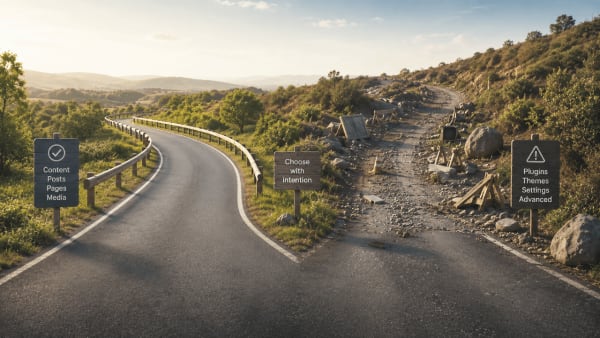
Installing a new plugin, changing permalink settings, switching themes, or modifying important configuration can affect much more than the task immediately in front of you.
As discussed in What are WordPress admin guardrails?, these higher-impact actions naturally benefit from clearer operational boundaries.
Good guardrails reduce the need for constant caution
Many website owners eventually develop a habit of being careful around certain parts of the WordPress dashboard.
They pause before opening Settings. They think twice before installing a plugin. They postpone changes because they are unsure what else might be affected.
That hesitation is understandable.
The goal should not be to make people constantly remember which actions require extra care.
Well-designed operational guardrails help carry some of that responsibility.
They create an environment where everyday tasks remain simple while actions with broader consequences receive the attention they deserve.
Rather than constantly asking people to be more careful, the workflow itself becomes easier to trust.
Operations continue to evolve
WordPress administration today extends beyond pages, posts, themes, and plugins.
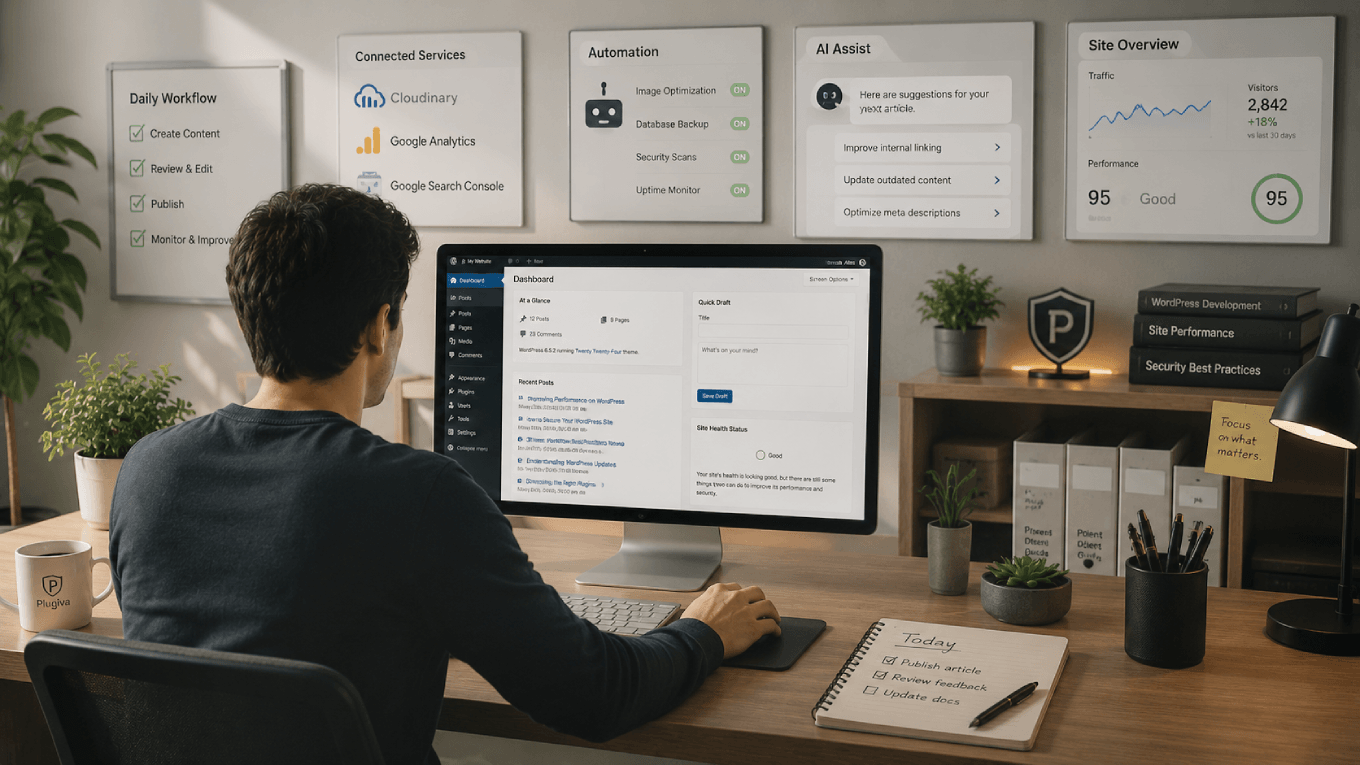
Many websites now connect with external services, automation platforms, and AI-powered tools that assist with content creation, customer support, or site management.
These capabilities create exciting opportunities, but they also introduce additional operational decisions.
The principle remains the same.
Whether someone is installing a plugin, changing permalink settings, connecting a new service, or enabling AI features, actions with broader consequences deserve a more thoughtful workflow than routine content updates.
Operational guardrails support people, not just websites
It is easy to think about guardrails as a way to protect a website.
They also protect the people responsible for managing it.
A predictable workflow reduces unnecessary uncertainty. It becomes easier to know which actions are routine and which deserve a deliberate decision.
That benefits experienced developers, freelancers handing websites over to clients, internal teams, and site owners who simply want confidence that everyday administration will remain straightforward.
Have accidental admin changes ever caused problems on your WordPress site?
Small decisions shape long-term maintenance
Many operational problems do not begin with major failures.
They begin with small decisions repeated over months or years.
One unnecessary plugin. One overlooked setting. One unexpected configuration change.
Individually, they rarely seem significant.
Together, they gradually shape how predictable a website feels to manage.
This is one reason why safer WordPress workflows create more confident site management.
Operational guardrails are not about removing flexibility from WordPress.
They help ensure that flexibility remains practical as websites continue to grow, evolve, and become part of everyday work.