Why websites evolve
Every website reaches a point where someone says, "This doesn't fit us anymore."
Sometimes the request is small.
"We need another approval step before publishing."
Sometimes it's more structural.
"We've started offering a new service, and the website doesn't really know where it belongs."
Occasionally it's much bigger.
"The way we work has changed. The website hasn't."
For years, I treated these as unrelated problems.
Each project had its own story with different businesses, different teams, different goals, and different requests.
Some businesses were growing quickly while others were recovering from mistakes. Some were responding to new regulations. Others were simply discovering that the assumptions they made a few years earlier no longer matched reality.
On the surface, none of these projects looked alike.
But after enough of them, a pattern became difficult to ignore.
The website was almost never the thing that had changed first.
The organization had.
That realization quietly changed the way I looked at website development.
When a business hires more people, responsibilities change.
When responsibilities change, workflows begin to change.
When workflows change, the website starts feeling awkward. Information no longer fits where it used to. People need different permissions. New content types appear. Existing processes become frustrating. Small workarounds slowly become everyday habits.
At some point, someone decides the website needs to evolve.
It's tempting to think that's where the story begins.
It isn't.
By the time a redesign is discussed or a new feature is requested, the organization has usually been adapting to a new reality for quite some time. The website is simply catching up.
That also explains something else I've noticed over the years.
Growing websites rarely become more complicated for the sake of it.
They become more specialized.
Not because complexity is the goal, but because the organization now expects the website to support a way of working that didn't exist before.
Seen one feature at a time, those changes look technical.
Seen over several years, they tell a completely different story.
They reveal the evolution of the organization itself.
That's why I no longer think of website evolution as a sequence of redesigns or feature requests.
I think of it as a reflection.
A website evolves when the organization adapts to a new reality.
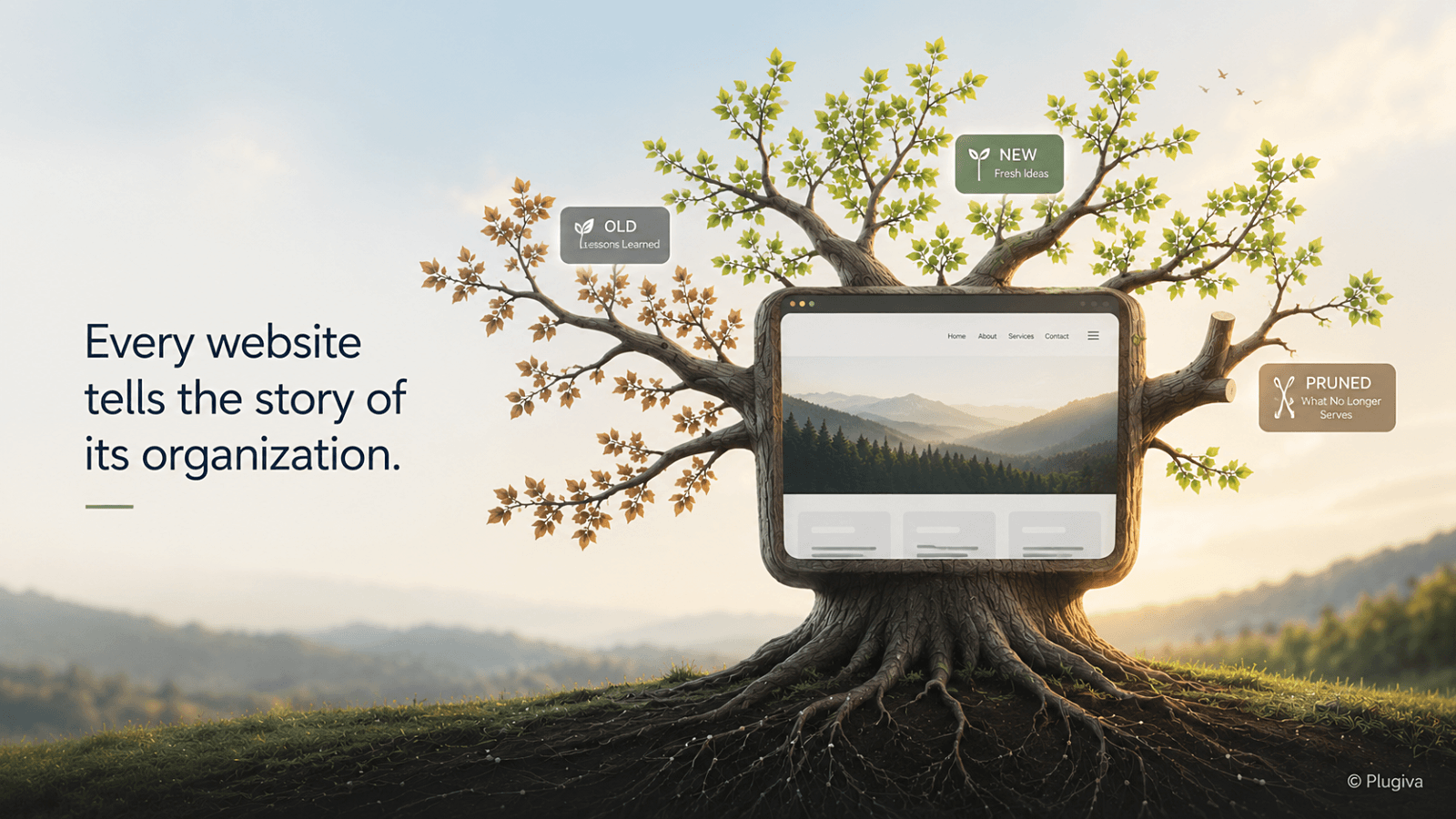
Everything else - the workflows, permissions, governance, content structures, and even the technology - is simply evidence that the reflection has changed.
What usually triggers major changes to your website?