The difference between what website owners see and what users experience
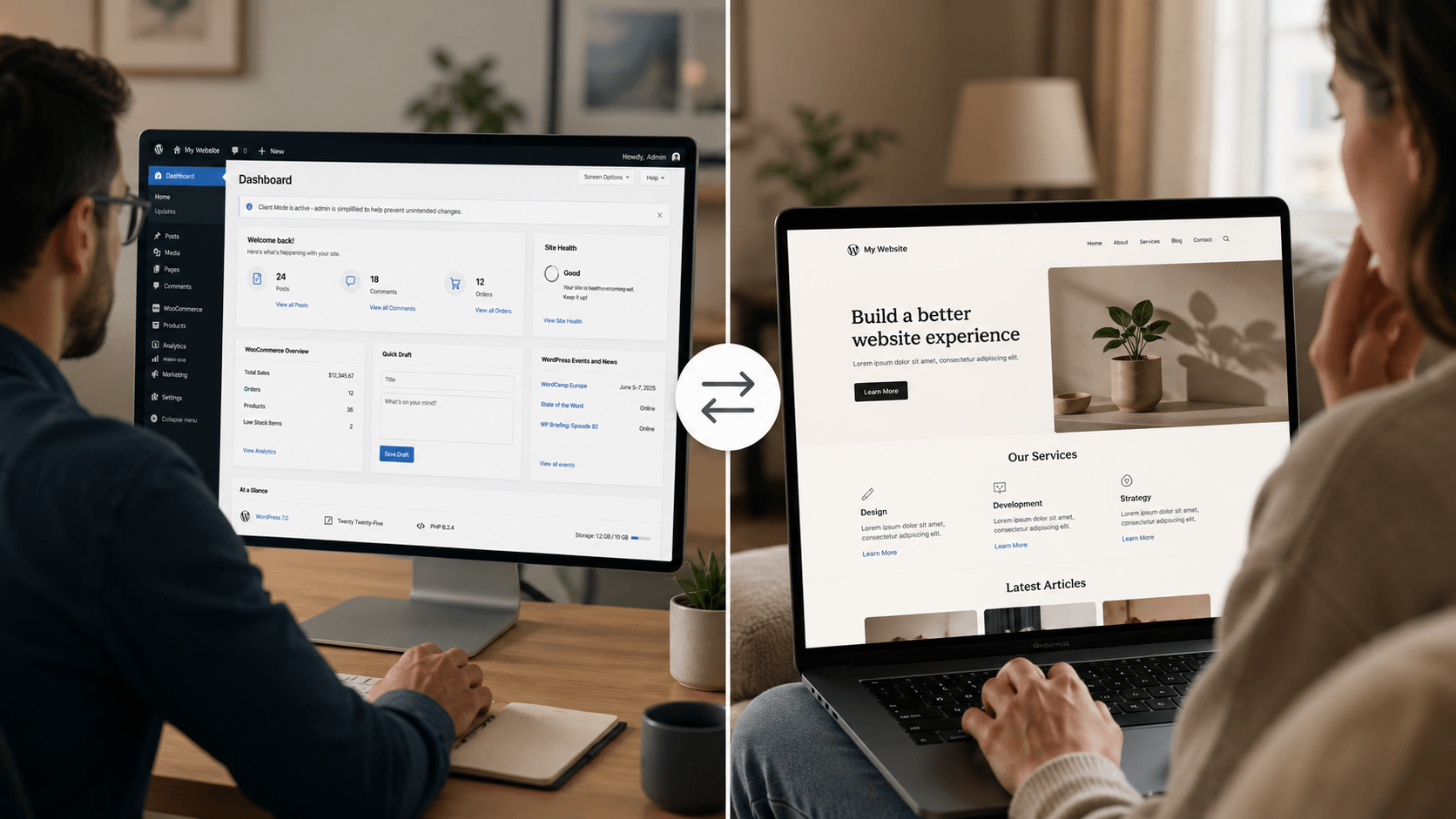
Website owners spend hours, days, and often years working on their websites.
They know where everything is located and understand how the navigation works. The terminology, workflows, and design decisions behind every page are already familiar to them.
Over time, the website becomes familiar. This familiarity is useful.
But it can also create a gap between what website owners see and what users actually experience.
While both groups are looking at the same website, they are often seeing very different things.
Website owners see context that users do not have
A website owner usually understands the purpose behind every section of a website.
They know why a button exists, where a form leads, and what happens after a visitor completes an action.
Users arrive without that context.
They do not know the decisions that shaped the website, the assumptions behind the navigation, or which pages receive the most attention from the site owner.
Instead, they arrive with their own goals, expectations, and questions.
This difference often explains why visitors behave in ways that seem surprising to website owners.
What feels obvious to owners may not feel obvious to users
Many website owners have experienced moments where visitors overlook something that feels impossible to miss.
A clearly labeled button goes unnoticed. An important notice gets ignored. Instructions that seem straightforward are skipped completely.
When this happens, it is tempting to assume that users simply were not paying attention.
In reality, people interact with websites differently depending on their goals, experience levels, and available attention.
Visitors are often focused on completing a task rather than exploring a website carefully.
What appears obvious to someone who knows the website well may be much less visible to someone seeing it for the first time.
Familiarity can hide usability problems
One of the challenges of managing a website is that familiarity changes perception.
The more time people spend using their own websites, the harder it becomes to experience those websites as new visitors would.
Small moments of confusion become invisible because the workflows feel natural to the people who created them.
This is one reason why certain website problems can remain unnoticed for long periods of time.
The issue is not usually a lack of effort or attention.
The issue is that experience changes perspective.
Users often reveal things that analytics cannot
Analytics can show what visitors do.
They can show page views, bounce rates, conversions, clicks, and navigation paths.
What analytics often cannot explain is why those behaviors occurred.
This is where user observations become valuable.
Questions, reactions, comments, support requests, and moments of hesitation can reveal gaps between owner expectations and user experiences.
Many of the most useful insights come from situations where visitors struggle with something that website owners never expected to be confusing.
Better websites start with better perspective
Improving a website is not only about adding features, redesigning layouts, or creating new content.
It is also about recognizing that users bring a different perspective to the experience.
The goal is not to predict every possible behavior.
It is to remain open to the possibility that visitors may experience the website differently than expected.
In many cases, the most valuable feedback begins with understanding that website owners and users are often seeing the same website through very different lenses.
Was this article helpful?